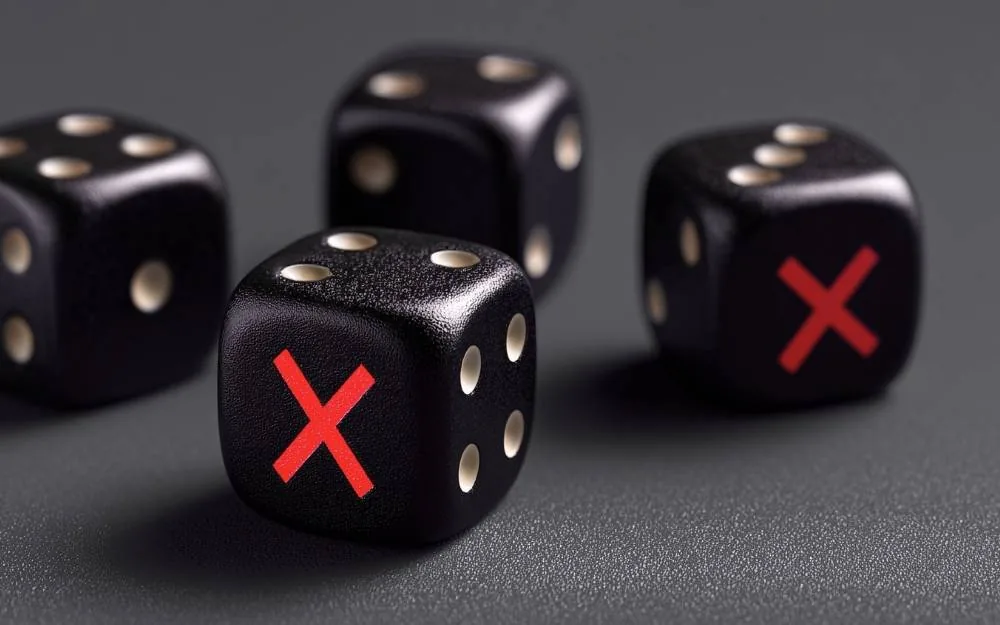
Probability is often associated with percentages, formulas, and statistics—but in everyday life, people rarely think in numbers. Instead, decisions are shaped by patterns, experience, intuition, and perception.
Understanding probability without the numbers helps explain how people judge uncertainty, assess likelihood, and make decisions—even when exact odds are unknown.
What Probability Really Represents
At its core, probability describes how likely an outcome is, not what will happen next.
In real-world situations:
Outcomes are uncertain
Information is incomplete
Results are influenced by chance
Probability is about ranges and tendencies, not guarantees. Recognising this distinction is key to better judgement.
How People Naturally Understand Probability
Humans evolved to recognise patterns, not calculate odds. As a result, probability is often understood through experience rather than mathematics.
People estimate likelihood by:
Remembering past outcomes
Noticing repetition or streaks
Judging how “normal” or “rare” something feels
These mental shortcuts make probability intuitive—but not always accurate.
The Difference Between Possibility and Likelihood
A common misunderstanding is confusing what can happen with what is likely to happen.
Possibility means an outcome could occur
Likelihood reflects how often it tends to occur over time
Without this distinction, people may overreact to rare events or underestimate common risks.
Why Recent Events Feel More Important
Recency plays a powerful role in perceived probability.
The Impact of Recent Outcomes
Recent events often:
Feel more relevant than older ones
Influence expectations disproportionately
Create false confidence or unnecessary fear
This leads people to believe patterns are forming—even when outcomes are independent.
Patterns, Streaks, and False Signals
Humans are excellent at finding patterns—even when none exist.
This can lead to:
Believing streaks must continue or end
Assuming cause where there is only coincidence
Adjusting behaviour based on perceived momentum
Understanding probability means recognising that randomness often looks patterned in the short term.
Why Certainty Feels Comforting—but Is Misleading
People prefer certainty, even in uncertain situations. This leads to overconfident predictions and simplified explanations.
Certainty bias can cause:
Overestimation of control
Ignoring alternative outcomes
Resistance to new information
Accepting uncertainty improves decision quality, even when outcomes remain unpredictable.
Thinking in Ranges Instead of Outcomes
A healthier way to understand probability is to think in ranges of possible outcomes, not single predictions.
This approach encourages:
Flexible expectations
Reduced emotional reactions
Better long-term judgement
When outcomes are viewed as part of a broader range, individual results carry less psychological weight.
Experience Shapes Probability Perception
Personal experience strongly influences how probability is interpreted.
If an outcome has:
Happened before, it feels more likely
Not happened recently, it feels less likely
However, experience does not always reflect true likelihood—especially in complex or random systems.
Probability Is About Perspective, Not Precision
You don’t need numbers to understand probability—you need perspective.
Good probabilistic thinking involves:
Accepting uncertainty
Avoiding absolute conclusions
Evaluating decisions over time, not one moment
This mindset leads to calmer, more consistent behaviour.
Understanding Probability Improves Decision-Making
When probability is understood without relying on numbers, decisions become less reactive and more grounded.
It helps people:
Avoid overconfidence
Resist emotional swings
Focus on decision quality rather than prediction accuracy
Probability is not about knowing the future—it’s about navigating uncertainty wisely.
Better Judgement Comes From Better Understanding
Probability doesn’t promise certainty. What it offers is context. By understanding likelihood in practical, non-numerical terms, individuals can make decisions that are more thoughtful, resilient, and aligned with reality.
Recognising uncertainty is not a weakness—it’s a strength.